
Simplifying Complex Projects: The Value of Coordinated Engineering and Fabrication
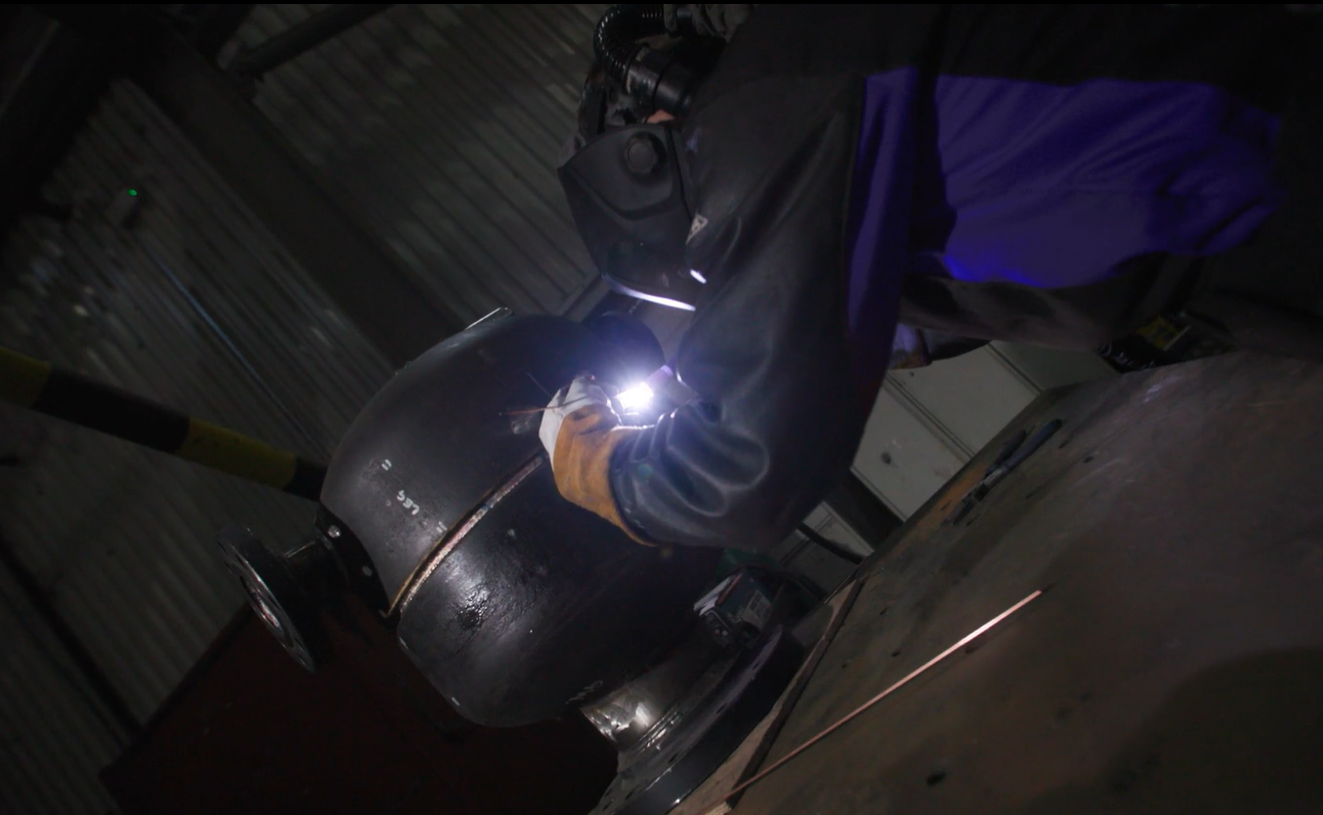
A pressure vessel can meet every requirement on the drawing and still present challenges when it reaches the workshop.
A weld might be difficult to access. An inspection requirement could affect the order of assembly. A particular material might need a different approach to fabrication.
None of these necessarily means there’s anything wrong with the design. But they highlight something important: engineering decisions and manufacturing requirements need to be considered together.
For organisations commissioning bespoke pressure equipment, this coordination can make the difference between a manufacturing process that’s clearly planned and one that requires avoidable adjustments along the way.
The aim isn’t to remove every challenge. It’s to understand what’s involved early enough to manage it effectively.
Where Do Complex Pressure Vessel Projects Become Complicated?
Bespoke pressure vessel manufacturing rarely follows exactly the same route from one project to the next.
A vessel might need an unusual geometry, a particular material grade or a configuration designed around an existing installation. It may also need to meet stringent requirements for welding, inspection, testing and documentation.
Each requirement makes sense individually. The challenge is understanding how they affect one another.
For example, a change in material specification may influence the welding procedures required. A particular vessel geometry might affect how components are prepared and assembled. Inspection requirements could determine when certain fabrication operations need to take place.
These relationships are especially important in safety-critical and regulated industries, where manufacturing decisions must remain consistent with the equipment’s technical requirements.
That’s why complex fabrication projects need more than individual specialists doing their jobs well. They need a manufacturing approach that connects the different stages.
Why Engineering and Fabrication Need to Work Together
Engineering establishes what the equipment needs to achieve. Fabrication expertise helps determine how those requirements can be met in practice.
Both are essential, but problems can arise when they’re treated as entirely separate activities.
A design may be technically sound while still presenting manufacturing challenges that could have been identified earlier.
Can the specified materials be prepared and formed as intended? Will there be sufficient access for welding? Can the required inspections be carried out? Does the proposed assembly sequence allow for the specified testing?
These questions are easier to address when manufacturing knowledge is part of the conversation before fabrication begins.
Early coordination doesn’t mean compromising the design to make something easier to manufacture. It means understanding the practical implications of the specification and establishing an appropriate route to achieving it.
For bespoke pressure equipment, where every project can bring different requirements, that understanding is particularly valuable.
Small Decisions Can Have Significant Manufacturing Consequences
Sometimes, the value of coordinated engineering and fabrication becomes clearest when looking at a single manufacturing detail.
Imagine a bespoke pressure vessel with an internal weld that requires inspection before another component is fitted.
If that requirement is identified during manufacturing planning, the assembly sequence can be arranged to provide the necessary access.
If it’s only considered after the surrounding components have been installed, the team may need to reconsider how the inspection can be completed.
The same principle applies to material selection, vessel dimensions, component positioning and other aspects of fabrication.
A decision that appears relatively small during design can influence several later manufacturing stages.
This doesn’t mean every potential issue can be predicted. It does mean that considering engineering, fabrication and inspection together creates more opportunities to identify practical constraints before they become problems.
And for customers, that’s a much more useful outcome than simply discovering an issue once production is underway.
Planning the Complete Manufacturing Route
Once the technical requirements are understood, the next step is establishing how the equipment will move through manufacture.
For a bespoke pressure vessel, this may involve material preparation, forming, assembly, welding, inspection, pressure testing and supporting documentation.
The order matters.
Some operations depend on earlier dimensional checks. Certain welds may need inspection before assembly continues. Testing requirements must also be considered when determining how the finished equipment will be verified.
A coordinated manufacturing route helps establish these dependencies before work begins.
It also provides a clearer basis for communication between engineers, coded welders, fabrication teams, inspectors and quality personnel.
Of course, questions can still arise during production. Specifications may need clarification, or a proposed change may require further technical consideration.
When that happens, clear communication and controlled decision-making help ensure the manufacturing process continues to reflect the project’s requirements.
The objective isn’t a rigid plan that can never change. It’s a controlled approach in which changes are properly understood and addressed.
Quality Needs to Be Considered From the Start
For pressure equipment used in nuclear, energy, water, oil and gas and other regulated industries, quality requirements are an essential part of manufacturing planning.
They cannot simply be added once fabrication is complete.
Material traceability, qualified welding procedures, inspection stages, testing and documentation may all influence the manufacturing route.
At LTi Vessco, we manufacture high-integrity pressure vessels and associated equipment for demanding applications, with in-house pressure testing and non-destructive testing available where specified.
Our manufacturing operations are supported by recognised credentials, including ISO 9001, ISO 3834, and ASME U Stamp capability.
These reflect the importance of controlled processes and appropriate quality assurance when manufacturing pressure equipment for safety-critical applications.
By considering inspection and testing alongside fabrication, rather than as separate final activities, manufacturers can establish a clearer route to meeting the specified requirements.
Why Bespoke and Low-Volume Projects Need a Different Approach
It’s easy to assume that detailed manufacturing coordination is mainly relevant to large production programmes.
In reality, a single bespoke pressure vessel can involve considerable engineering and fabrication complexity.
Unlike repeat manufacturing, there may be limited opportunity to refine the process across multiple identical units. The equipment may also involve unusual dimensions, specialist materials or requirements specific to one application.
That makes practical manufacturing knowledge particularly important.
LTi Vessco specialises in bespoke and low-volume pressure vessel manufacturing, supporting projects where a standard production approach may not be suitable.
From our facility in Bridgend, South Wales, we manufacture pressure vessels, heat exchangers, pressurised columns, tanks, silos, skid packages and supporting fabrications.
This broader capability is particularly relevant when a project involves several fabricated elements that need to work together.
A skid package, for example, may require pressure equipment and supporting structures to be considered as parts of the same assembly. Dimensions, interfaces, fabrication requirements and inspection all need to be understood in relation to the finished package.
The individual components matter, but so does how they come together.
What Does Better Coordination Mean for Customers?
For someone responsible for procuring bespoke pressure equipment, the value of coordination is practical rather than theoretical.
You need confidence that the manufacturing requirements have been understood, that the proposed equipment can be fabricated to specification and that inspection and testing have been properly considered.
Early engagement with a specialist manufacturer can help answer important questions before production begins.
It can clarify where particular manufacturing considerations exist, what information is needed and how the different stages of fabrication are expected to work together.
That can reduce the likelihood of avoidable complications and provide better visibility of the manufacturing process.
It also helps customers make informed decisions when technical questions arise.
None of this guarantees that a complex project will be free from challenges. Bespoke engineering rarely works that way.
What it does provide is a more structured approach to managing those challenges, with the technical and manufacturing requirements considered together.
Making Complex Projects More Manageable With LTi Vessco
LTi Vessco has specialised in pressure equipment since 2006, designing, manufacturing, testing and certifying bespoke vessels and associated fabrications for technically demanding industries.
Our experience spans nuclear, power generation, water and utilities, oil and gas and industrial processing, with capabilities covering a wide range of vessel sizes, materials and configurations.
For customers, the value lies in bringing engineering understanding, specialist fabrication, welding expertise and quality-controlled manufacturing into the same conversation.
Because complex projects don’t become simpler by overlooking their technical demands.
They become more manageable when potential complications are recognised early, decisions are made with the complete manufacturing process in mind, and everyone involved understands what needs to happen next.
Planning a bespoke pressure vessel, skid package or specialist fabrication project? Speak to the LTi Vessco team about your requirements. Involving manufacturing expertise early can help establish a practical, controlled route from specification through to finished equipment.