
LTi Vessco contributes to consortium advancing thermal shield technology for UK fusion programme
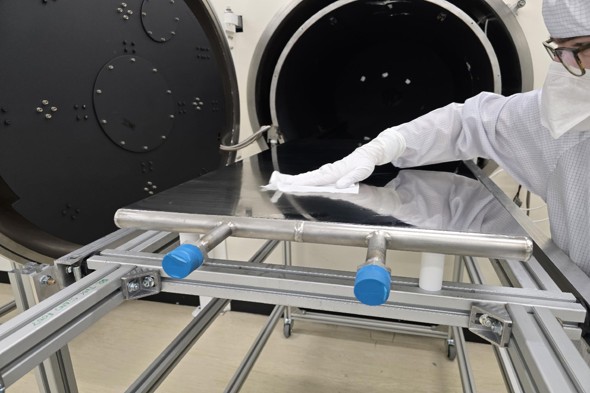
LTi Vessco has played a key role in a collaborative research project supporting the UK’s Spherical Tokamak for Energy Production (STEP) programme, contributing its specialist manufacturing expertise to the development and evaluation of next-generation thermal shield technologies for future fusion power plants.
Working as part of a consortium alongside the Manufacturing Technology Centre (MTC), the University of Sheffield Advanced Manufacturing Research Centre (AMRC) and scientists from UK Atomic Energy Authority (UKAEA), the project explored innovative thermal shield designs capable of improving cooling performance within one of the world’s most challenging engineering environments.
Fusion energy is widely regarded as one of the most promising long-term solutions for delivering safe, low-carbon electricity. Within a fusion reactor, thermal shields perform a critical role by protecting superconducting components operating at extremely low temperatures from the intense heat generated by the reactor’s plasma-facing systems.
The project began with a comprehensive optioneering exercise, assessing a range of potential thermal shield concepts against the approach currently adopted for the ITER fusion programme under construction in southern France. Following detailed design studies and computational modelling undertaken by MTC, two concepts were selected for prototype manufacture and testing.
Drawing on its expertise in high-integrity fabrication and advanced manufacturing, LTi Vessco was responsible for designing and commissioning production of demonstrator units for both designs before conducting an extensive programme of testing to evaluate their performance.
In total LTi Vessco designed and manufactured seven individual demonstrators using the two chosen concepts. Following manufacture, selected demonstrators underwent a variety of specialist surface finishing treatments, including silver plating, mechanical polishing and electropolishing, before being subjected to more than 20 individual tests, including emissivity testing. Evaluation was carried out across LTi’s facilities in Bridgend and Abingdon, at LTi’s Metaltest mechanical testing laboratory, and at the Rutherford Appleton Laboratory near Didcot.
The results demonstrated that both prototype designs have significant potential for future application within the STEP programme, with each delivering substantially improved thermal cooling performance compared with the conventional welded pipe methodology currently used within the ITER reactor.
While further research and development will determine whether either concept is ultimately incorporated into the STEP reactor, the project represents another important milestone in the ongoing development of technologies that could help make commercial fusion energy a reality.
Julian Vance Daniel, Business Development Director of LTi Vessco, said:
“Fusion energy represents one of the greatest engineering opportunities of our time, and we’re proud that LTi Vessco has been able to contribute its manufacturing expertise to a project supporting the UK’s fusion ambitions.
Projects like this demonstrate the value of collaboration between industry, research organisations and scientific institutions. Working alongside the MTC, the AMRC and UK Fusion Energy has enabled us to apply our capabilities to the development of innovative technologies that could play an important role in the future of clean energy.”
Edgar Rayner, Managing Director of LTi, added:
“Projects like STEP demonstrate the important role that UK manufacturers can play in developing the technologies needed for the future.
At LTi, we’re proud to be involved in work that goes beyond traditional manufacturing, bringing together engineering expertise, innovation and collaboration to help address some of the biggest challenges facing the energy sector.
It’s a great example of our ethos, Making Stuff That Matters, and the contribution our businesses can make to the UK’s future energy ambitions.”
LTi Vessco has an established track record of manufacturing complex, high-integrity engineered solutions for the nuclear, energy and process sectors. Its involvement in projects such as STEP further reinforces the company’s capability to support advanced technologies requiring precision manufacturing, rigorous quality standards and specialist fabrication expertise.
As investment in fusion research continues to grow, projects such as this highlight the increasingly important role UK manufacturers will play in transforming innovative engineering concepts into commercially deployable energy technologies.